- Good News

Jerome Gustilo
Jun 24,2020
Is Vaseline Safe?
Petroleum jelly (petrolatum) has been a staple in homes for over a century thanks to its myriad of uses. For years, it had been a dry skin sufferers' best friend until reports about it possibly containing carcinogenic substances began to arise. The concern with its impurities have to do with the manufacturing process which includes polycyclic aromatic hydrocarbons (PAHs) that are considered to have potential links to breast cancer.

Since there are so many beauty benefits and myths surrounding petroleum jelly, it makes us wonder: What's actually fact and what's fiction? To find out, we chatted with a board-certified dermatologist and a cosmetic chemist, consulted recent research, and dug deep to learn about the origins of petroleum, all its intended uses, and whether or not it's safe to use on your skin. Keep scrolling for the full run-down on all things petroleum.

What Is Petroleum Jelly?
Petrolatum is a mixture of natural mineral oils and waxes, which are formed into partially solid, gel-like substance. It was first discovered in 1859 when the thick oil was found clogging up the machinery on oil drilling sites. It was later converted to petroleum jelly, then packaged and sold after oil workers found that the white, gooey residue appeared to aid in the healing process of burns and cuts on their skin,

Is Petroleum Jelly Safe?
In more recent years, there has been controversy surrounding the actual benefits of petroleum jelly. Some sources claim that petroleum jelly does not actually heal cuts and wounds and that it could actually trap bacteria in the skin and should not be used on fresh burns, while others sing its praises.

According to board-certified dermatologist Dr. Lily Talakoub, MD, FAAD, "Petroleum jelly is one of the safest products for the skin. It is safe on all skin types and has very little allergenic or irritant potential. It holds moisture in the skin and can help heal wounds."


What Are the Biggest Concerns Surrounding Petroleum Jelly?

On the converse, some problems with petroleum have been discovered through the years, including something called lipid pneumonia, when petroleum jelly is used around and inside the nose. Lipid pneumonia is an infection caused by the inhalation of fats. According to dermatologists, you will not develop lipid pneumonia through occasional use. With petroleum jelly (and any beauty product, for that matter), take care to use the product only as directed. Misuse of any product could lead to undesirable results. Vaseline's representative confirms, noting that "Lipid pneumonia is not a known side-effect of using Vaseline in the directed way. Vaseline Jelly is intended for external use only and is safe when used as directed on the packaging."

Petrolatum is regularly added to lotions and creams because of its ability to retain moisture. But some health issues have raised concerns. The major concern that has flooded the Internet with numerous pro and con articles, are PAHs, known contaminants in unrefined petrolatum. Many health professionals, like Dr. Andrew Weil, have stated that there is no link between petroleum jelly and cancer.

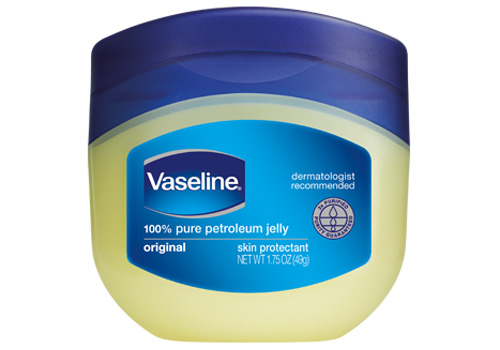
In fact, per Vaseline's representative, "Vaseline Jelly meets U.S. and EU Pharmacopoeia standards on purity. It is triple-purified to remove any type of carcinogenic material—meaning it does not pose a risk of causing cancer. It’s the only petroleum jelly with the unique triple-purification seal."

Refined vs. Unrefined Petroleum Jelly
USP petroleum jelly is not the same as the unrefined petrolatum material, which is said to be carcinogenic. Petrolatum in drugs, food, and food packaging must meet FDA impurity restrictions. White petroleum jelly is a refined, purified extract of heavy waxes and paraffinic oils, and USP white petroleum jelly has passed the safety standards of the FDA for use in food and cosmetics.2

The problem is that not all manufacturers choose to use refined petrolatum or use low-grade refinement processing, and there is the potential for PAHs to still be present. Consumers should look for USP white petroleum jelly (BP in Britain and Ph. Eur in Europe) which indicates the grade, where it was refined, and that it meets specific purity standards, and go with trusted brands like Vaseline Petroleum Jelly. The Environmental Working Group (EWG) has given Vaseline Petroleum Jelly a 0 rating, meaning that the organization considers it to be a low hazard. See more about the rating here.

0 Comments
Check Out More Good News

Quote of the Day
Jul 18,2026


"Quezon" Official Trailer | Reaction Video
Aug 25,2025


















Comments