- Good News

Lawrence Dominique Tolentino
Sep 04,2020
How to be a good person
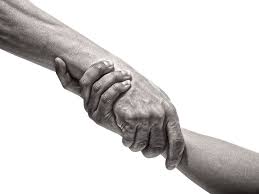
We are here today because our ancestors learned that survival depended on every person doing the right thing and having each other’s back. Today our survival still depends on that, as do our inner peace and sense of well-being.

“Our actions change our reality. Our intentions matter. Most people believe that their actions have consequences but don’t think through the implications of that belief. But Steve [Jobs, owner of Pixar] did. He believed, as I do, that it is precisely by acting on our intentions and staying true to our values that we change the world.”

Learning to Control Fire:
Our earliest ancestors numbered a few tens of thousands at most and lived in small bands of several dozen each. At first humans ate vegetation, which has low energy per weight. Meat has more energy per weight than vegetation and thus is a more efficient way to obtain the protein that is vital to survival. Eventually our ancestors figured out that when they ate meat they spent less time and energy finding food. At first they killed animals and ate their flesh raw, but they found that the meat of animals killed in and cooked by wildfires was easier to digest, and thus its protein could be utilized more easily.
At first they intentionally set wild fires to kill and cook animals but that was inefficient. So they learned to control fire and to hunt. On vast, expansive grasslands hunters on foot would run animals down and kill them. They would station themselves at different locations and trade off running after an animal until it was totally exhausted.** Then they would return to their campsite where a fire was always burning, and cook and eat their kill.
Thus through learning to control the use of fire, humans insured themselves a steady diet of vital, dense, meat protein. That high energy diet then caused the human brain to increase in size from 400 – 500 cubic centimeters to 1,500 – 1,700 cubic centimeters today. It was this tripling of brain size that provided them with the memory capacity that was essential for developing what were to become our breakout skills as a species – abstract thinking and language. (To learn more about how abstract thinking and language developed, and how those limit our freedom today, see The Rise of Abstract Thinking.)

Building And Defending An Established Nest:
Most creatures on Earth build nests. Yet once a nest has served its purpose most creatures abandon their nest and build a new one when needed. Humans are one of only seven creatures on Earth that build permanent nests and defend them, which is called eusociality.Our eusocial behavior was the primary reason humans came to dominate Earth.
Learning to control the use of fire at campsites (our “nest”) so that meat could be cooked greatly amplified behaviors that today defined what it means to be human – the division and specialization of labor, trust and cooperation.
Wilson describes this: “The advantages of cooperation in the harvesting of meat led to the formation of highly organized groups. These consisted of extended families and allied tribes, so the population could be as large as could be sustained by the local environment. This became an advantage when resources became limited and the need to fight other tribes [to the death] for resources was needed.”
“The cohesion forced by the concentration of groups to protected [camp] sites was more than just a step through the evolutionary maze. It was … the event that launched the final drive to modern Homo sapiens.”
Our ancestors build campsites around fires and defended those. Some group members would leave the campsite to forage and hunt while others would stay behind to defend the camp and keep the children safe. In that division of labor, mutual trust and cooperation were vital. Survival was extremely difficult and each person HAD to fulfill their designated role and responsibilities because failure to do so threatened the survival of everyone in the group. And when food became scare, which it often did, the group had to battle neighboring groups for available food, often to the death, which demanded great cooperation and trust among everyone in the group.
Thus group members had to behave in ways that were acceptable to everyone because if they didn’t, it weakened the bonds that held the group together. Survival was based, literally, on doing unto others as you would have them do unto you.
Certainly group members competed with one another for status, for shares of food, for access to an available mate, and for a comfortable sleeping place. These pressures conferred an advantage on those who were able to read the intentions of others. The ability to gain trust, to form alliances, and to manage rivals had value. Thus human social intelligence grew and became central to life.
Despite the emergence of human social intelligence however, Wilson says there is an iron rule in genetic social evolution: within a group, selfish members beat altruists (unselfish members) but groups of altruists beat groups with selfish members. So, while selfish activities provide competitive advantage within a group, they also are destructive to the group as a whole. That is why today each of us experiences an ongoing tension between our selfish wants and desires and pleasing others in our group(s). That tension often feels uncomfortable, yet our creativity arises through finding the balance in that tension between selfishness and pleasing others.
Wilson says of this tension, “Or risking oversimplification, individual selection promoted sin, while group selection promoted virtue. Humans are suspended in unstable and constantly changing positions between [those] two extreme forces that created us … [and that tension] might be the only way in the entire Universe that human-level intelligence and social organization can evolve. We will find a way eventually to live with our inborn turmoil, and perhaps find pleasure in viewing it as the primary source of our creativity.”
Selfishness pays off; we see that everywhere. But, mutual trust, cooperation and selflessness determine which group wins. So, if you want your family, your friends and their children to survive, your best bet appears to be to belong to group(s) with individuals who truly trust and cooperate with one another rather than group(s) of selfish individuals who look out mainly for themselves.

What Has Value:
You are here today because cooperation was highly valued by your ancestors. Their survival depended on it. Thus cooperation became a deeply ingrained instinct in humans, one that is waiting to guide you as you look for the people and groups in life that you can trust. But, you will not find those people unless those people see that they can trust you also.
How do people determine if they can trust you? They look at whether you share their values. They look at whether you are truly living their values and not just talking about them. They look at whether you are truly living your life with integrity, goodness, humility, honesty, fairness, loyalty, honor, kindness, patience and courage.
So, how do you build those values in yourself? How do you figure out if others share your values? Those questions and others are discussed below.
Circumstances may be forcing you to rely on people and groups today that you do not trust. However, when people are free to choose whom to trust, they usually make that choice based on shared values. You encounter a new person or group that might become important in your life and you immediately start to wonder, “Are they committed to doing the right thing? Will they back me when the going gets tough? Do they value what I value?” Just remember: they are probably asking those same questions about you.


Why Be Good
We are here today because our ancestors learned that survival depended on every person doing the right thing and having each other’s back. Today our survival still depends on that, as do our inner peace and sense of well-being.

“Our actions change our reality. Our intentions matter. Most people believe that their actions have consequences but don’t think through the implications of that belief. But Steve [Jobs, owner of Pixar] did. He believed, as I do, that it is precisely by acting on our intentions and staying true to our values that we change the world.”

How Humans Came to Dominate Earth

The extinction of dinosaurs 65 million years ago left niches on Earth in which the ancestors of humans could flourish. Yet from the time the dinosaurs were wiped out it took 64.8 million more years before humans (Homo sapiens) first appeared on Earth about 200,000 years ago.

About 99% of the 3 billion species that ever lived on Earth are now extinct*, mainly because they did not adapt to changing conditions. You are here today because your ancestors in every one of the past 10,000 generations figured out how to survive against such very long odds. They survived because each generation figured out how to adapt to the changing conditions in which they found themselves. Now it’s our turn to figure out how to adapt to the changing conditions in which we find ourselves, thus insuring the survival of coming generations.

In The Social Conquest of Earth, Edward O. Wilson describes how human domination of Earth today resulted from a series of adaptations by our earliest ancestors. Those ancient adaptations became deeply ingrained instincts in us that today determine many of our automatic responses and behaviors. Many of those instincts still serve to keep us alive, but some instincts from those caveman days now threaten our survival. But we’re getting ahead of our story. Let’s start from the beginning.

Of the many adaptations that got us here, we owe our appearance on Earth largely to having learned to control fire and to our highly unusual instinct to build and defend an established nest.

Learning to Control Fire:

Our earliest ancestors numbered a few tens of thousands at most and lived in small bands of several dozen each. At first humans ate vegetation, which has low energy per weight. Meat has more energy per weight than vegetation and thus is a more efficient way to obtain the protein that is vital to survival. Eventually our ancestors figured out that when they ate meat they spent less time and energy finding food. At first they killed animals and ate their flesh raw, but they found that the meat of animals killed in and cooked by wildfires was easier to digest, and thus its protein could be utilized more easily.

At first they intentionally set wild fires to kill and cook animals but that was inefficient. So they learned to control fire and to hunt. On vast, expansive grasslands hunters on foot would run animals down and kill them. They would station themselves at different locations and trade off running after an animal until it was totally exhausted.** Then they would return to their campsite where a fire was always burning, and cook and eat their kill.

Thus through learning to control the use of fire, humans insured themselves a steady diet of vital, dense, meat protein. That high energy diet then caused the human brain to increase in size from 400 – 500 cubic centimeters to 1,500 – 1,700 cubic centimeters today. It was this tripling of brain size that provided them with the memory capacity that was essential for developing what were to become our breakout skills as a species – abstract thinking and language. (To learn more about how abstract thinking and language developed, and how those limit our freedom today, see The Rise of Abstract Thinking.)

Building And Defending An Established Nest

Most creatures on Earth build nests. Yet once a nest has served its purpose most creatures abandon their nest and build a new one when needed. Humans are one of only seven creatures on Earth that build permanent nests and defend them, which is called eusociality.*** Our eusocial behavior was the primary reason humans came to dominate Earth.

Learning to control the use of fire at campsites (our “nest”) so that meat could be cooked greatly amplified behaviors that today defined what it means to be human – the division and specialization of labor, trust and cooperation.

Wilson describes this: “The advantages of cooperation in the harvesting of meat led to the formation of highly organized groups. These consisted of extended families and allied tribes, so the population could be as large as could be sustained by the local environment. This became an advantage when resources became limited and the need to fight other tribes [to the death] for resources was needed.”

“The cohesion forced by the concentration of groups to protected [camp] sites was more than just a step through the evolutionary maze. It was … the event that launched the final drive to modern Homo sapiens.”

Our ancestors build campsites around fires and defended those. Some group members would leave the campsite to forage and hunt while others would stay behind to defend the camp and keep the children safe. In that division of labor, mutual trust and cooperation were vital. Survival was extremely difficult and each person HAD to fulfill their designated role and responsibilities because failure to do so threatened the survival of everyone in the group. And when food became scare, which it often did, the group had to battle neighboring groups for available food, often to the death, which demanded great cooperation and trust among everyone in the group.

Thus group members had to behave in ways that were acceptable to everyone because if they didn’t, it weakened the bonds that held the group together. Survival was based, literally, on doing unto others as you would have them do unto you.

Certainly group members competed with one another for status, for shares of food, for access to an available mate, and for a comfortable sleeping place. These pressures conferred an advantage on those who were able to read the intentions of others. The ability to gain trust, to form alliances, and to manage rivals had value. Thus human social intelligence grew and became central to life.

Despite the emergence of human social intelligence however, Wilson says there is an iron rule in genetic social evolution: within a group, selfish members beat altruists (unselfish members) but groups of altruists beat groups with selfish members. So, while selfish activities provide competitive advantage within a group, they also are destructive to the group as a whole. That is why today each of us experiences an ongoing tension between our selfish wants and desires and pleasing others in our group(s). That tension often feels uncomfortable, yet our creativity arises through finding the balance in that tension between selfishness and pleasing others.

Wilson says of this tension, “Or risking oversimplification, individual selection promoted sin, while group selection promoted virtue. Humans are suspended in unstable and constantly changing positions between [those] two extreme forces that created us … [and that tension] might be the only way in the entire Universe that human-level intelligence and social organization can evolve. We will find a way eventually to live with our inborn turmoil, and perhaps find pleasure in viewing it as the primary source of our creativity.”

Selfishness pays off; we see that everywhere. But, mutual trust, cooperation and selflessness determine which group wins. So, if you want your family, your friends and their children to survive, your best bet appears to be to belong to group(s) with individuals who truly trust and cooperate with one another rather than group(s) of selfish individuals who look out mainly for themselves.

What Has Value:
You are here today because cooperation was highly valued by your ancestors. Their survival depended on it. Thus cooperation became a deeply ingrained instinct in humans, one that is waiting to guide you as you look for the people and groups in life that you can trust. But, you will not find those people unless those people see that they can trust you also.
How do people determine if they can trust you? They look at whether you share their values. They look at whether you are truly living their values and not just talking about them. They look at whether you are truly living your life with integrity, goodness, humility, honesty, fairness, loyalty, honor, kindness, patience and courage.
So, how do you build those values in yourself? How do you figure out if others share your values? Those questions and others are discussed below.
Circumstances may be forcing you to rely on people and groups today that you do not trust. However, when people are free to choose whom to trust, they usually make that choice based on shared values. You encounter a new person or group that might become important in your life and you immediately start to wonder, “Are they committed to doing the right thing? Will they back me when the going gets tough? Do they value what I value?” Just remember: they are probably asking those same questions about you.

How To Build Good Values:
You build good values in yourself by continually acting on your intention to do the right thing. Through continually acting on your intention to do the right thing, doing the right thing becomes a habit that arises more spontaneously when you need it.
So why do the right thing when so many people don’t?
because you know instinctively that doing the right thing will benefit you because it will result in others trusting you, cooperating with you and supporting you in getting what you need in life;
because you know instinctively that by doing the right thing you become the person you were meant to be – the best person you can be, who you are then proud of;
because doing the right thing appears to be the only way humans will continue to survive on Earth.

4 Comments
-
.png) JustKatPabloSep 04, 2020 14:40nice article, but i think some of the paragraphs are doubled =)
JustKatPabloSep 04, 2020 14:40nice article, but i think some of the paragraphs are doubled =) -
 Lawrence Dominique TolentinoSep 04, 2020 11:22Yes 😊
 -
 AEGYO NEWSSep 04, 2020 09:59thankss
Check Out More Good News

Quote of the Day
Jul 18,2026


"Quezon" Official Trailer | Reaction Video
Aug 25,2025





.jpeg)









Comments